May 28, 2026
May 28, 2026
Wondering whether Tarzana feels like the right fit for your next move? If you are looking for a Los Angeles neighborhood that blends a calmer residential setting with practical daily convenience, Tarzana deserves a closer look. From home prices and rental options to parks, commuting, and everyday errands, here is what you can expect when living in Tarzana. Let’s dive in.
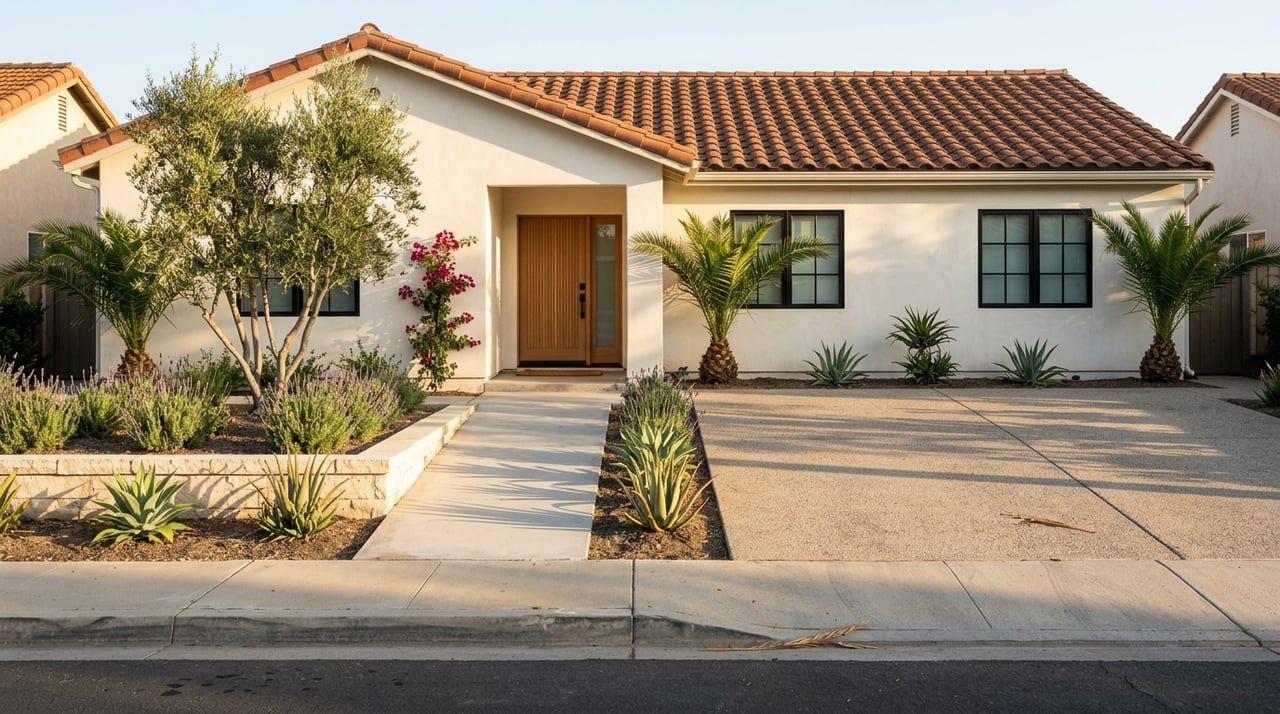
Tarzana offers a mix of quiet residential streets and a more active commercial corridor along Ventura Boulevard. According to the Encino-Tarzana Community Plan, areas south of Ventura Boulevard are predominantly single-family residential, while the Ventura frontage is shaped by strip-center commercial uses. That layout gives the neighborhood a practical rhythm, with calmer pockets for living and a central area for errands, dining, and services.
The area also appears relatively stable by Los Angeles standards. In the 91356 ZIP code, the median age is 42.3, 91% of residents lived in the same home a year earlier, 58% of occupied units are owner-occupied, and 57% of housing is single-unit. Taken together, those numbers suggest Tarzana appeals to people who want to put down roots rather than cycle through a short-term stop.
Tarzana is moderately walkable, with a Walk Score of 54. In real life, that usually means you can handle some errands and dining trips on foot near Ventura Boulevard, but you will likely still rely on a car for many daily needs.
That balance is part of Tarzana’s identity. It does not function like a dense, urban neighborhood where nearly everything is steps away. Instead, it offers a suburban-style layout with more walkable pockets near its commercial spine.
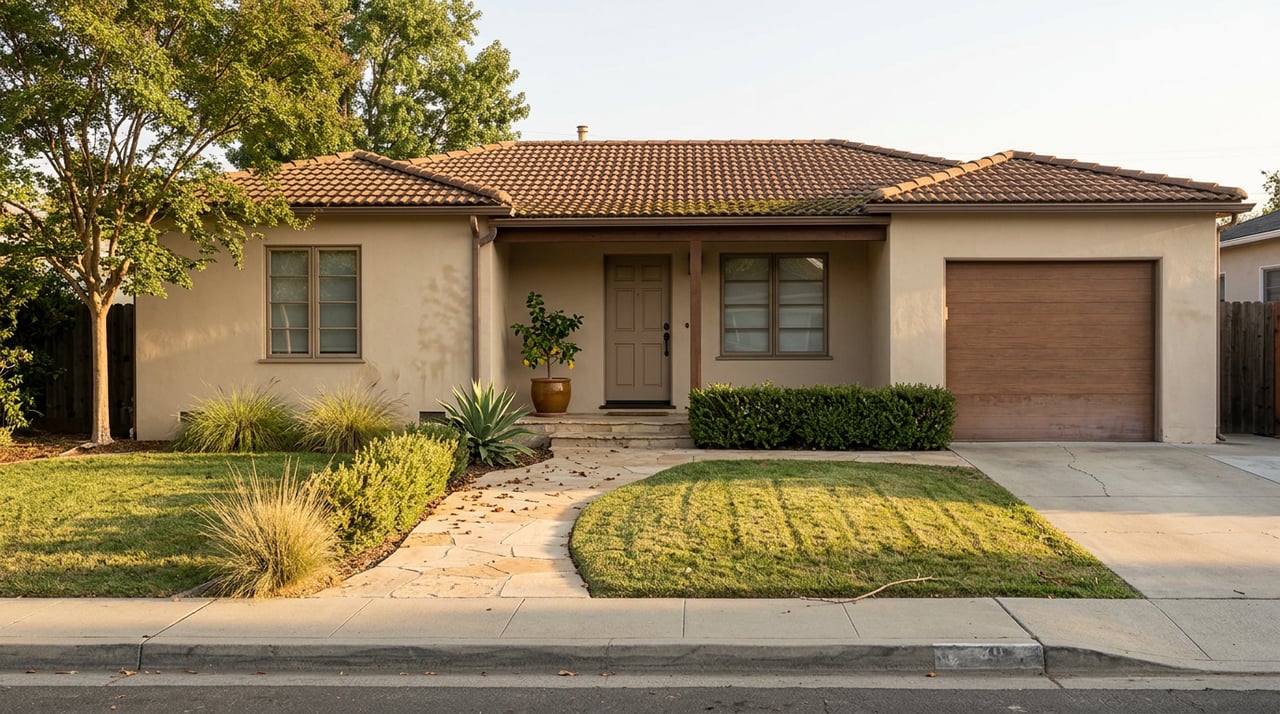
If you are home shopping in Tarzana, you will find a wide spread in property types and price points. Detached homes tend to define much of the neighborhood’s residential identity, especially in the single-family areas noted in the community plan.
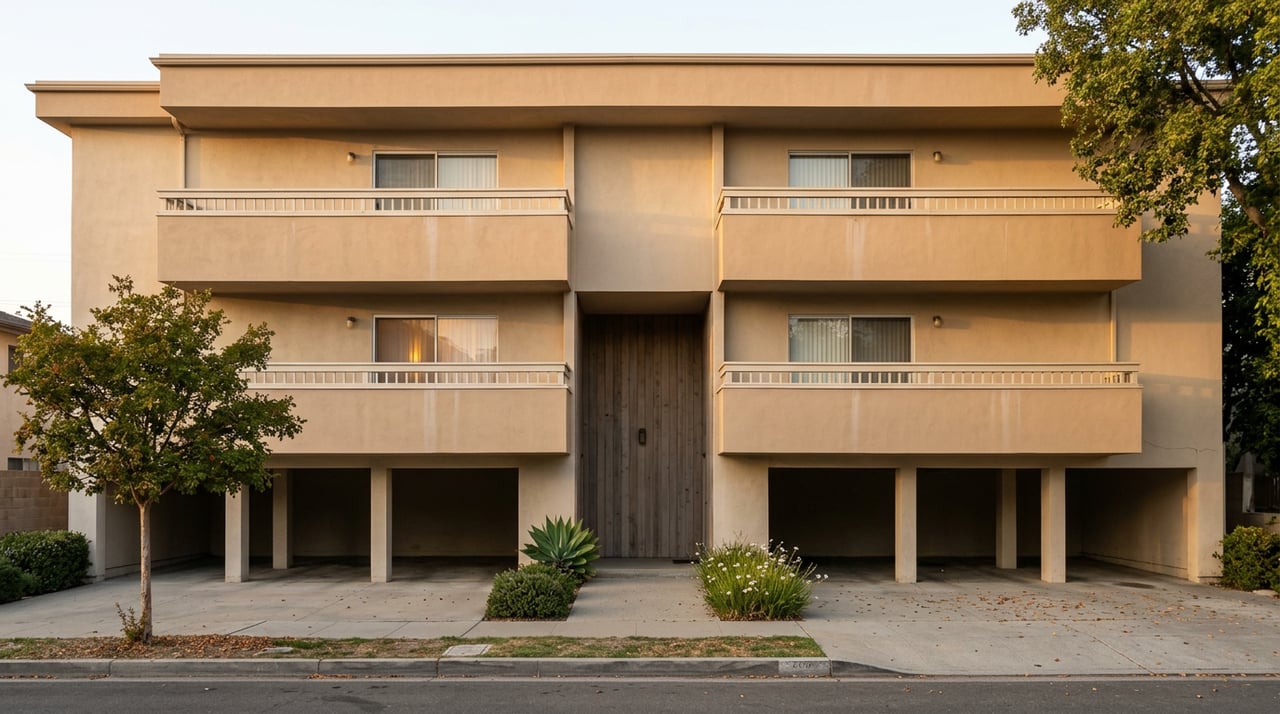
At the same time, condos and townhome-style options create a lower entry point for some buyers. Current condo listings in Tarzana show asking prices from about $346,000 to $670,000, with a median listing price of $428,000. That range can make Tarzana more accessible if you want to buy in the area without stepping immediately into detached-home pricing.
For buyers focused on a house, the budget picture changes. A current single-family listing example shows a midcentury ranch at $1,150,000, which lines up with broader market trends in the neighborhood.
Several data points place Tarzana’s ownership market in the low-$1 million range:
This tells you something important about Tarzana. It offers variety, but detached homes generally require a higher budget, while condos may serve as a more realistic entry point for many first-time or budget-conscious buyers.
If you are not ready to buy, Tarzana also offers rental options that are more attainable than its ownership market. Apartments.com reports an average rent of $1,758 per month, with average rents around $1,458 for studios, $1,758 for one-bedrooms, $2,436 for two-bedrooms, and $2,972 for three-bedrooms.
Most rental prices in the neighborhood fall between $1,501 and $2,000, though 28% are above $2,000. Apartment averages are also notably lower than house rental averages, which matters if you are weighing lifestyle against monthly cost. For renters who want access to the west San Fernando Valley and a more established neighborhood feel, Tarzana can be a practical option.
One of Tarzana’s strengths is its everyday access to recreation. The Tarzana Recreation Center at 5655 Vanalden Avenue is a major local asset, offering sports leagues, camps, preschool and afterschool programming, basketball courts, baseball diamonds, a gym, a playground, picnic tables, and a multipurpose room.
That kind of year-round programming gives the neighborhood a steady community rhythm. Whether you are looking for places to stay active, spend time outdoors, or build routines close to home, the rec center adds real day-to-day value.
For a more natural setting, Marvin Braude Mulholland Gateway Park is one of the area’s biggest outdoor draws. The National Park Service describes it as 1,500 acres of wild land above the western San Fernando Valley, with hiking, biking, and equestrian trails.
Its main trailhead sits at the southern end of Reseda Boulevard in Tarzana. The park also offers parking, restrooms, water, and expansive mountain and city views, which makes it a strong option if you want quick access to outdoor recreation without leaving the area.
Smaller neighborhood green space is also available at Mecca Avenue Park. Together, these spaces give Tarzana a nice mix of structured recreation and open-air escape.
Ventura Boulevard is the center of Tarzana’s daily activity. This is where much of the neighborhood’s dining, shopping, and service-oriented convenience comes together.
The dining scene leans casual and international rather than formal or nightlife-driven. Current options include CiCi’s Cafe for breakfast and brunch, Mona’s Kitchen and Café du Liban for Lebanese and Mediterranean cuisine, Kravings for Brazilian flavors, Firehouse Taverna for Greek food, and Arais Machane Yehuda LA for Middle Eastern fare.
That variety says a lot about everyday life in Tarzana. It is a place where going out to eat often feels like part of a regular weekly routine, not just a special occasion.
The Ventura corridor in Tarzana is built around strip-center commercial uses, with an emphasis on off-street parking near business areas. In practical terms, that means the neighborhood tends to function more like a drive-up errands-and-dinner corridor than a dense urban main street.
You may be able to walk parts of it, especially if you live nearby, but the overall experience remains convenience-focused. For many residents, that is a plus. It makes daily life feel straightforward and efficient.
Tarzana is still largely a car-first neighborhood. In the 91356 ZIP code, 61% of workers drive alone, 3% use public transit, 26% work from home, and the mean commute time is 31.7 minutes.
The area is served by the 101 Freeway for east-west travel and the 405 for north-south routes, which helps with regional access across Los Angeles. Metro’s current system map also shows local bus service on lines 150, 240, and 169, plus connections to the G Line.
For some residents, biking may also be part of the mix. The community plan identifies bikeways on Reseda Boulevard, White Oak Avenue, Mulholland Drive, and Hayvenhurst Avenue north of Ventura Boulevard.
Still, the big picture is clear. Tarzana works best if you are comfortable driving most places and want a neighborhood that offers easier regional connectivity than a fully urban, transit-first lifestyle.
Tarzana can make sense for several types of movers, especially if you value stability, space, and convenience. It may be a strong fit if you are comparing established Los Angeles neighborhoods and want a more residential feel without giving up access to dining and daily services.
You may especially appreciate Tarzana if you are looking for:
On the other hand, Tarzana may feel less ideal if your top priority is living in a dense, highly walkable district where you can do nearly everything on foot or by transit.
Living in Tarzana often means trading some urban density for breathing room and practical convenience. You get a neighborhood with a settled feel, a housing mix that spans condos to higher-priced detached homes, useful outdoor amenities, and a commercial corridor that supports daily life.
For many buyers and renters, that combination is exactly the appeal. Tarzana is not trying to be the busiest or trendiest part of Los Angeles. It offers something different: a more grounded residential environment with enough activity, access, and variety to keep daily life comfortable.
If you are weighing Tarzana against other Los Angeles neighborhoods, the right question is not whether it has everything. It is whether its balance of calm streets, Ventura Boulevard convenience, outdoor access, and car-friendly connectivity matches the way you want to live.
If you are considering a move to Tarzana and want clear, personalized guidance on buying, selling, renting, or evaluating property options, Karen Khachatrian offers a high-touch, strategic approach shaped by experience, precision, and strong client advocacy.
Stay up to date on the latest real estate trends.
Experience a level of service defined by discretion, precision, and excellence.