Pasadena Mills Act Property Tax Contract: What Buyers Need
September 10, 2026
September 10, 2026
"This one comes with a Mills Act contract, so your taxes are basically cut in half."
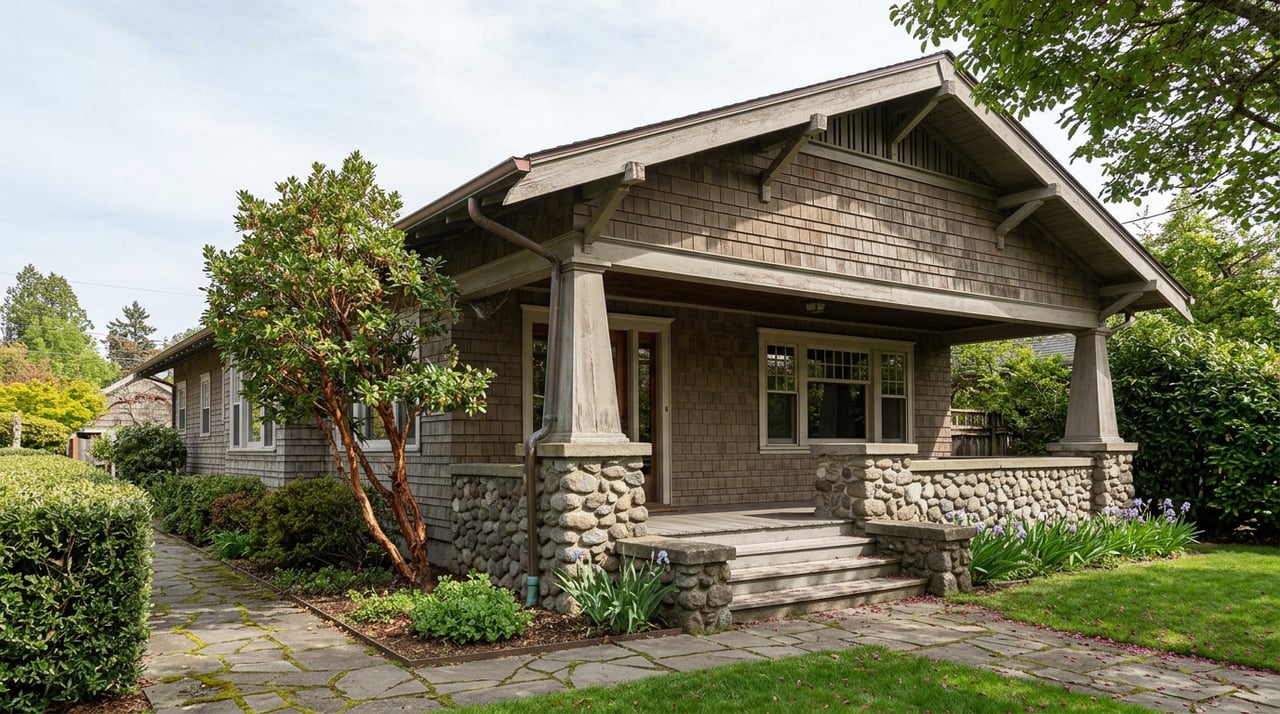
Buyers touring a craftsman bungalow near Washington Boulevard or a Prairie-style four-square off Orange Grove hear some version of that sentence more than they hear an actual number. It's the kind of line that sounds like a closing gift. It isn't. A Mills Act contract is a recorded legal agreement between the property owner and the City of Pasadena, and whether it saves the next owner real money or nothing at all depends less on the house than on the assessment history sitting underneath it.
That distinction rarely comes up during a showing, and it should, because the math runs in opposite directions for two buyers standing in the same living room.
The Mills Act lets California cities enter into agreements with owners of qualifying historic properties, trading a possible property tax reduction for a binding commitment to maintain and, where needed, restore the home according to the Secretary of the Interior's Standards. In Pasadena, the program runs through the Planning and Community Development Department's Design and Historic Preservation Section, with final approval going through the Historic Preservation Commission and then the City Council in public hearings.
Once a contract is signed, it gets recorded with the Los Angeles County Recorder and the county assessor is notified. Contracts run on an initial ten-year term that renews automatically each year, so in practice the agreement stays in force until someone files formal non-renewal, and even then the exit takes roughly a decade to complete because one more year keeps stacking on until the notice period runs out. That detail alone changes how a buyer should read a Mills Act line in a listing. It isn't a bonus feature. It's an inherited obligation that outlasts the sale.
Here is the part that gets skipped in most conversations. Pasadena's own guidance is clear that the Mills Act does not guarantee savings. The county assessor calculates the Mills Act value using an income-capitalization approach, essentially treating the home as if it generated rental income, rather than the standard market-based approach tied to your purchase price under Proposition 13. The law then applies whichever number is lower.
For a household that bought recently at market price, the fresh Prop 13 basis is high, so the income-based Mills Act number usually comes in well below it, and the county switches to the lower figure. That is where the widely quoted range comes from: Pasadena reports that past participants have saved between 20 and 75 percent on their property taxes, with average savings landing near 50 percent.
For a household that has owned the same home for two or three decades, the existing Prop 13 basis is already low from years of capped annual increases. When the assessor runs the Mills Act income approach on that same property, the result can come out higher than the owner's current bill. The county still applies the lower number, which means the original Prop 13 assessment stays in place and the Mills Act contract produces little or no reduction, sometimes none at all.
| Buyer profile | Existing tax basis | Mills Act income-approach estimate | Which number applies | Likely outcome |
|---|---|---|---|---|
| Recent buyer, purchased within the past few years at market price | High, tied to purchase price | Typically lower | Mills Act value | Meaningful reduction, often in the 20 to 75 percent range Pasadena reports |
| Long-time owner, decades of Prop 13 caps | Already low | Can exceed the existing basis | Existing Prop 13 basis | Little to no reduction |
The same contract, the same maintenance obligations, two very different financial outcomes. A seller who assumes their Mills Act status is a selling point needs to check which side of that table they actually sit on before promising a buyer anything.
If a Mills Act contract is already recorded against a property, it transfers to the new owner automatically at closing. The buyer takes on the remaining term, the approved maintenance plan, and the ongoing oversight that comes with it, which includes annual self-certification and periodic inspections, with state law requiring a review before a new agreement and at least every five years after that.
Breach the terms and the consequences are specific. Pasadena's guidelines allow the city to cancel a contract for violations, and the owner can owe a cancellation fee equal to 12.5 percent of the property's current assessed value as determined by the county assessor. That is not a hypothetical number buried in fine print. It is the kind of figure a buyer's lender or title company should see before removing contingencies, not after.
None of this restricts everyday living in the home. Interior changes are generally exempt from historic review, and Pasadena also treats paint color and most landscaping as outside the scope of a Certificate of Appropriateness. What triggers review is exterior work that's visible from the street: additions, new construction, demolition of a non-contributing structure, or anything that changes the building's height or footprint. The city estimates roughly two months for that review, with staff-level approvals moving faster than anything that has to go before the Commission.
Pasadena's historic housing stock isn't a handful of scattered addresses. Bungalow Heaven, the city's first designated Landmark District, dates its status to 1989 and sits on the National Register, filled with early twentieth-century craftsman bungalows in north central Pasadena. West of downtown, the Ross Grove Landmark District carries the nickname Millionaires Row from its 1890s heyday and holds the largest remaining grouping of original homes along South Orange Grove. The Prospect Historic District reflects some of the city's earliest exclusive subdivision planning, with wide curved streets and mature camphor and palm trees as a unifying feature. Arroyo Terrace is smaller, an L-shaped stretch off Orange Grove and Grand with notable Greene and Greene work and distinctive clinker-brick retaining walls.
A property in any of these districts is either individually designated, a contributing resource, or non-contributing, and that status is checkable before you ever write an offer through Pasadena's historic property inventory database. It matters because a non-contributing property in a landmark district faces a higher bar for Mills Act eligibility, generally requiring evidence that restoration would return it to contributing status.
One side note worth knowing if you're thinking beyond a single-family purchase: parcels inside a designated historic district or on a landmark site are generally exempt from SB 9's ministerial lot-split and two-unit approval process. If a lot split or added unit is part of your investment math, historic designation changes that calculation before you ever get to the Mills Act question.
Pasadena runs Mills Act applications on an annual cycle, and this year's window closed on Friday, May 29, 2026 at 5 p.m. Contracts approved from that cycle still need to clear Historic Preservation Commission and City Council review before being recorded, and recording has to happen by December 31 to matter. Contracts recorded by that year end deadline are typically reassessed by the following June 30, so the reduced tax figure doesn't actually appear on a bill until that fall.
Translated into a real calendar: an owner who closes on a Pasadena historic home this September and wants to apply for the Mills Act is not filing this year. Based on how the program's annual cycle has run, the next application window should open sometime early next year, which means recording wouldn't happen until the end of that year at the earliest, and the first adjusted tax bill wouldn't land until the following fall. Anyone buying now with Mills Act savings baked into their monthly budget needs to plan on roughly a year and a half before that number shows up anywhere.
A Mills Act contract does not expire when a home changes hands. It transfers, term and obligations intact, to whoever signs at closing.
Does selling a Mills Act property trigger a full property tax reassessment? No. The sale itself does not automatically reset the assessment to full market value. The Mills Act contract and its tax treatment carry forward to the new owner unless the contract is later canceled or allowed to lapse through the non-renewal process.
Can a new owner simply opt out of an existing Mills Act contract? Not easily. Because the contract transfers automatically and renews annually, exiting requires formal non-renewal, and the remaining term still runs for years after that notice is filed.
Does a Mills Act contract limit what a buyer can do with the property? It limits exterior changes visible from the street, which require a Certificate of Appropriateness. Interior alterations, paint color, and most landscaping are generally exempt from that review.
Is the federal historic rehabilitation tax credit the same thing as the Mills Act? No. The federal 20 percent credit generally applies only to income-producing, certified historic properties. Owner-occupied residences typically don't qualify for it, which makes the Mills Act the more relevant tool for most Pasadena homeowners.
Historic Pasadena real estate rewards buyers and sellers who read the fine print before they read the price. If you're weighing a Mills Act property, whether you're the one selling it or the one about to inherit its terms, Gary Khachatrian can walk through the assessment math and the contract obligations side by side before you commit to either. Let's Connect.
Stay up to date on the latest real estate trends.



Experience a level of service defined by discretion, precision, and excellence.